Killdeer Drama / Junior Field Guide
Drama in the Grass
A pocket guide to the killdeer who nests on the ground.
Meet the bird
A small, loud, brown-and-white bird
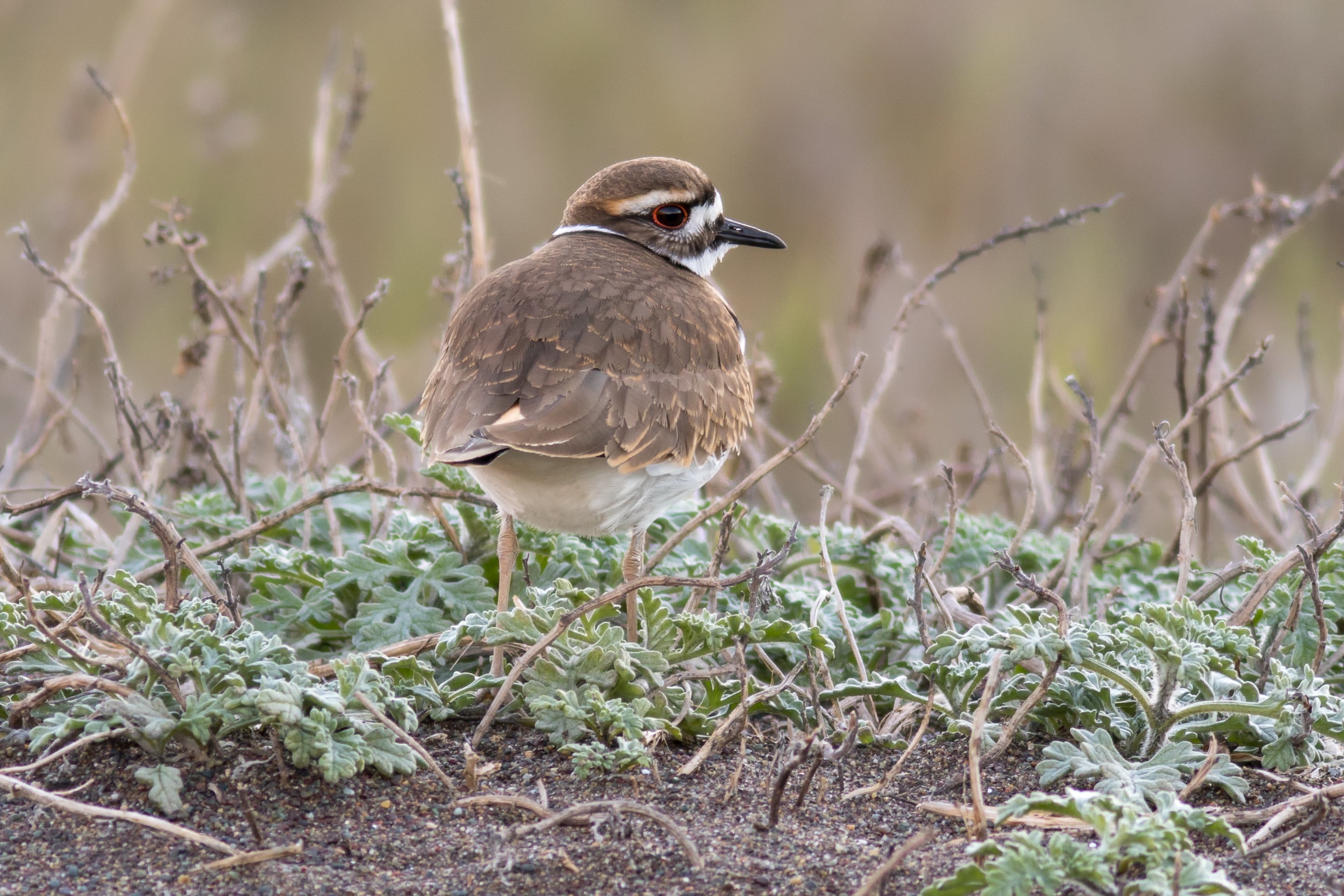
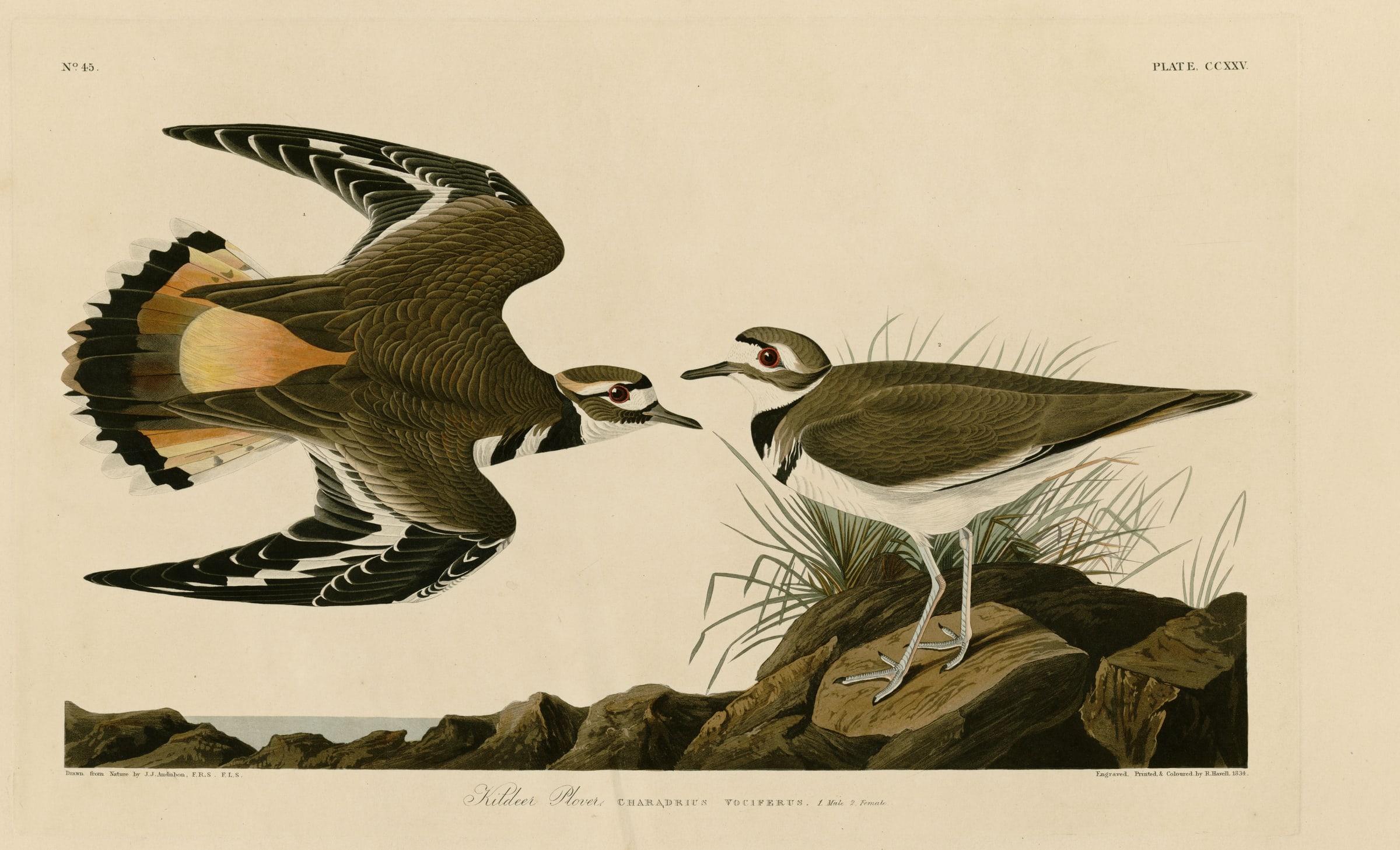
A killdeer is a small brown-and-white bird, about the size of a robin.
It has two black stripes across its chest, like a referee's shirt. Long pink legs. A bright red ring around its eye if you can get close enough to see it.
It eats bugs. It runs in fast little bursts, stops, then runs again. Like it is late for something.
The "kill-deer!" call
It is named for the sound it makes
Kill-deer! Kill-deer! When it is scared. When it is mad. When you walk too close.
Press play. That is a real killdeer.
The fake-out trick
The bird with a magic trick
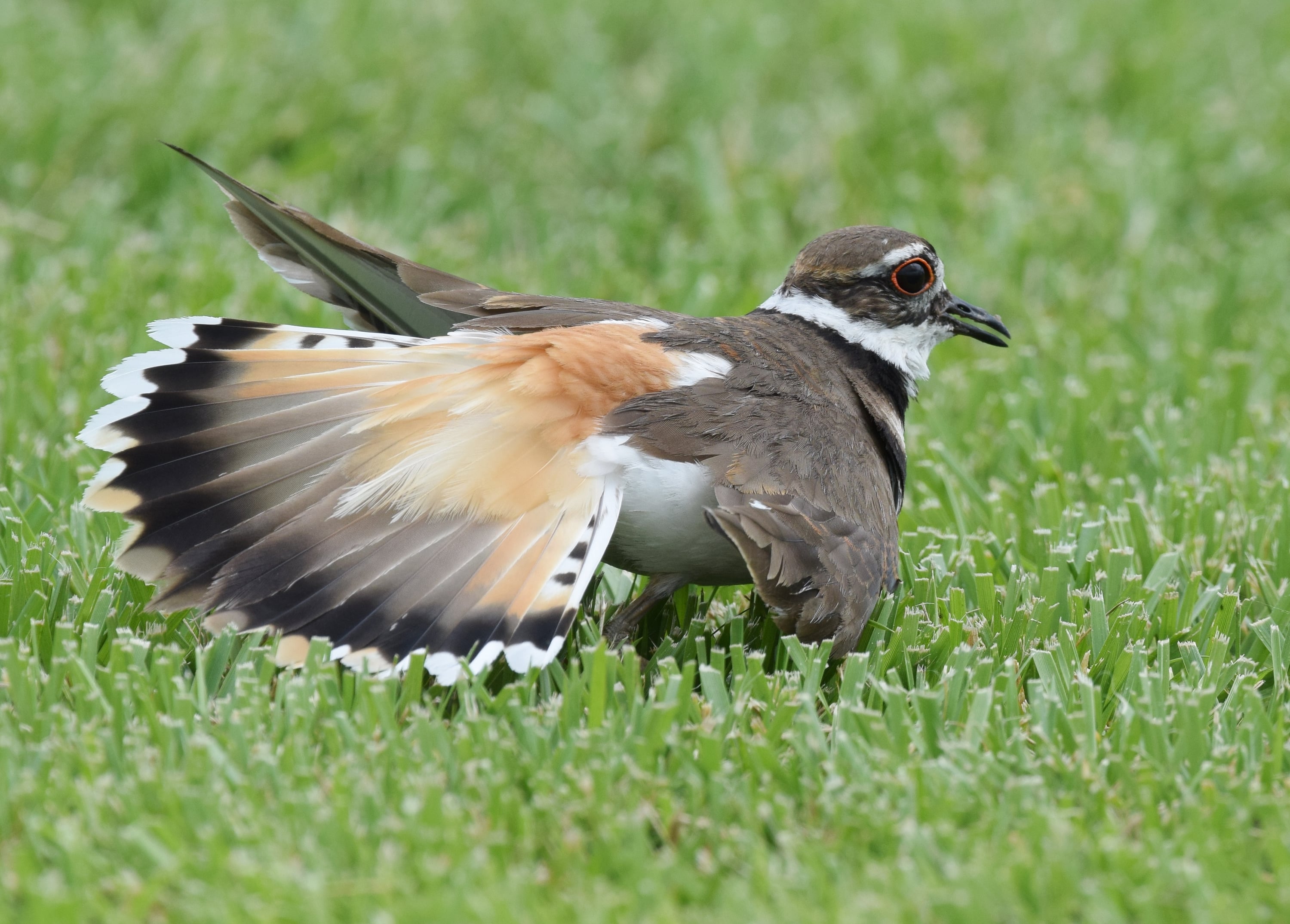
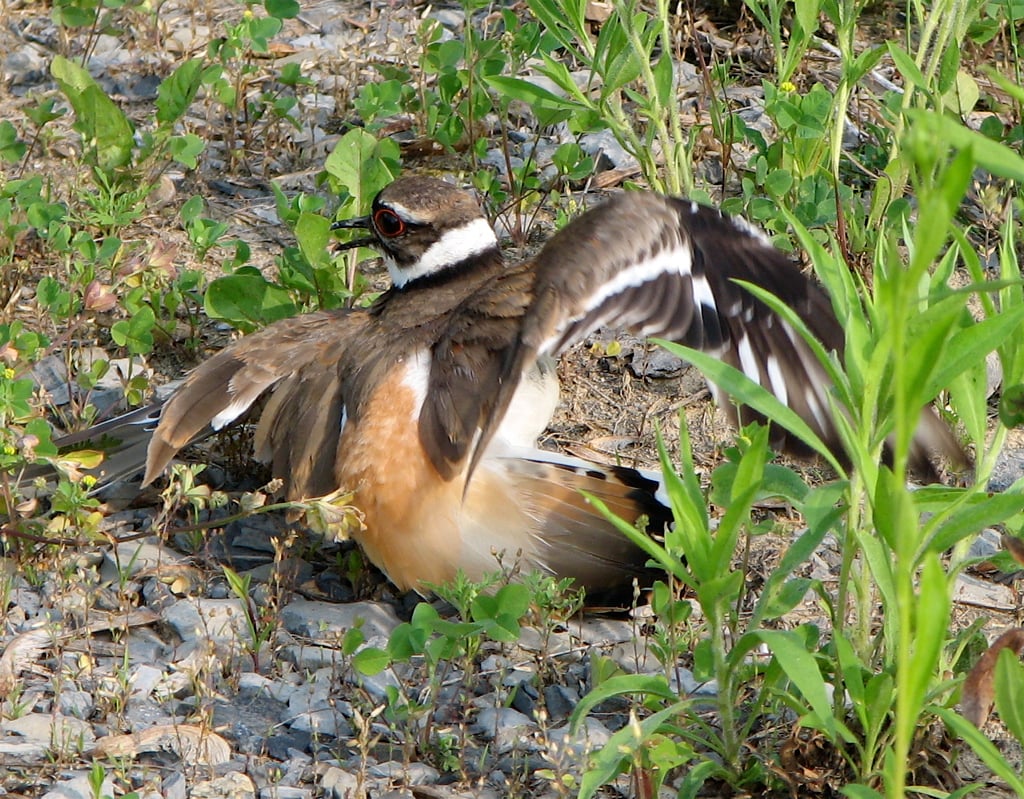
When a fox or a cat comes near the nest, the parent killdeer does something amazing.
It pretends one wing is broken. It limps. It cries. It drags itself across the ground like the easiest meal the fox has ever seen.
The fox forgets about the eggs. It chases the "hurt" bird instead. Step. Step. Step. Further and further from the nest.
Then, when the fox is far enough away, the wing works perfectly fine. The bird flies off. The trick is over.
From the museum drawer
Painted in 1838
From scratch to flight
How a killdeer grows up
-
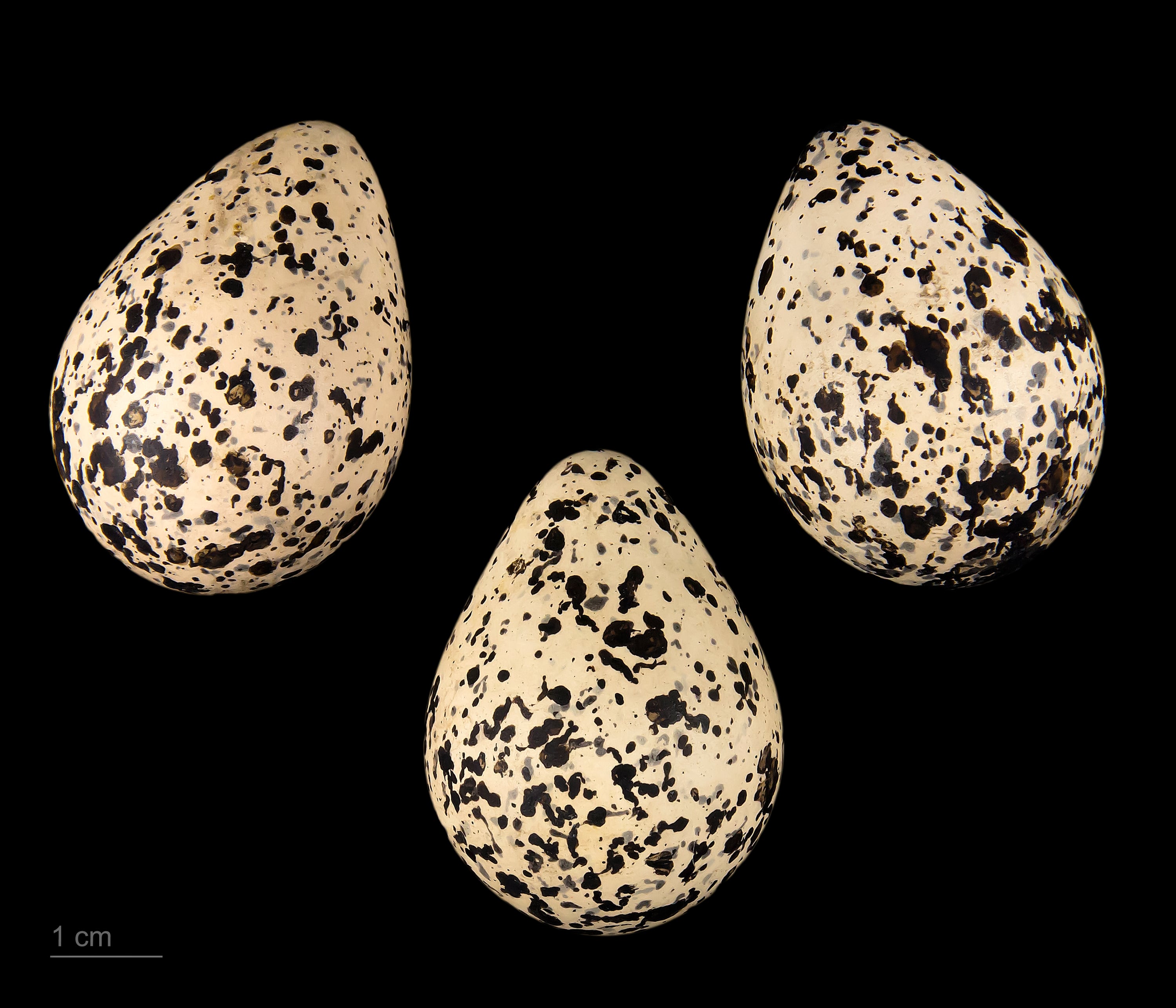
The scrape
The "nest" is just a dent in the dirt. No twigs. No grass. Sometimes a few pale pebbles for decoration.
-
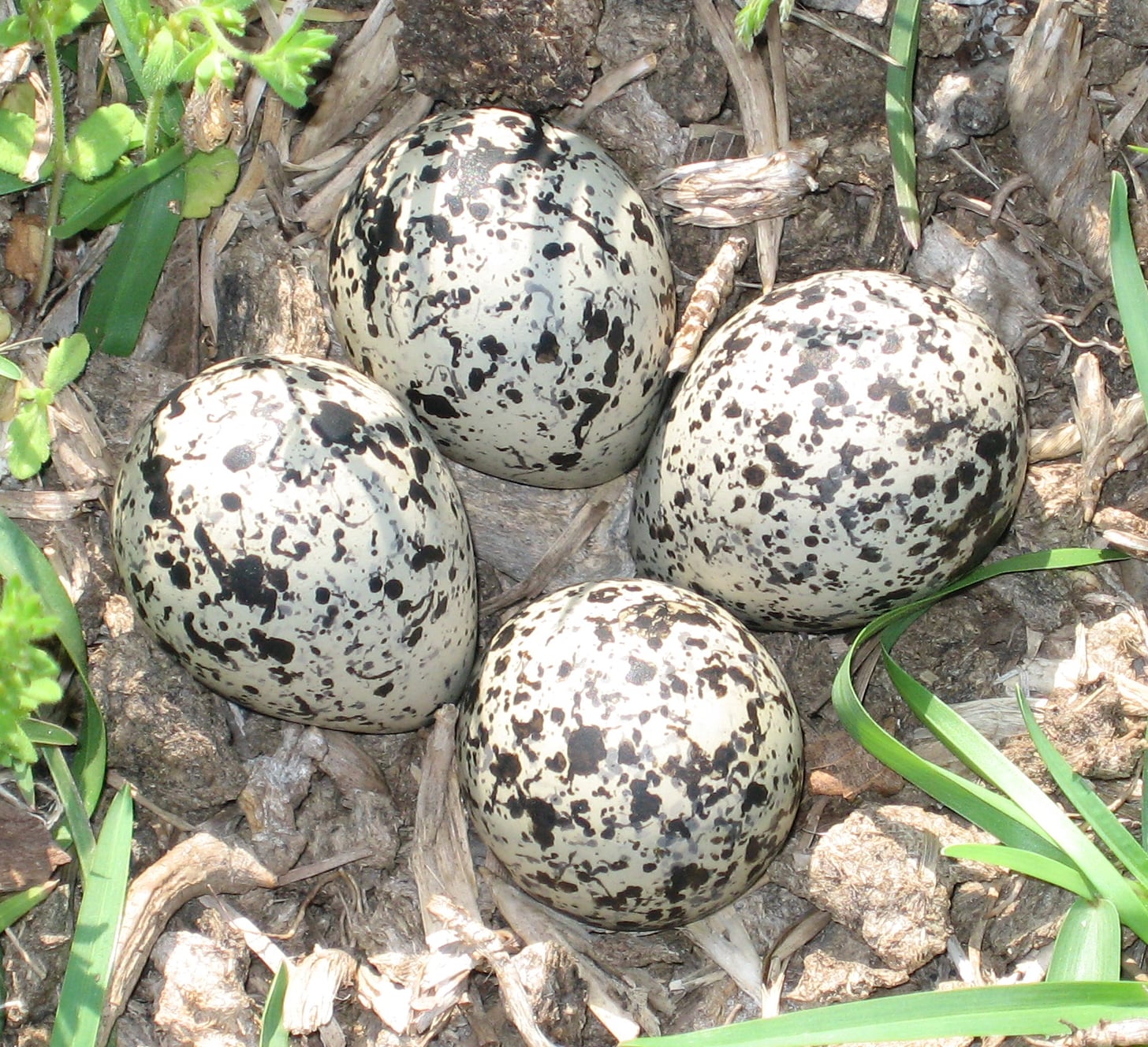
Four eggs
Almost always four. Speckled brown and black. Hidden in plain sight on bare ground.
-
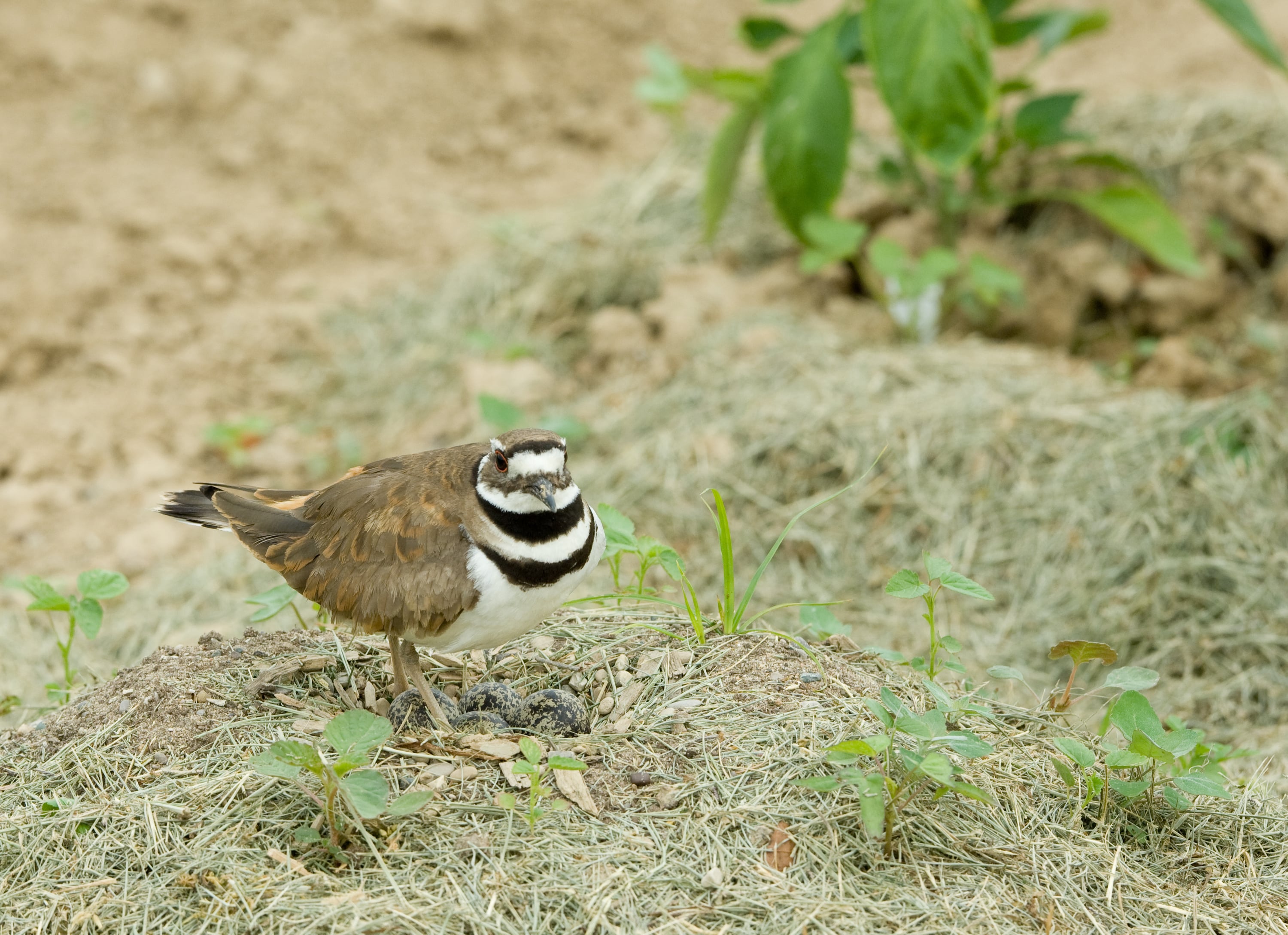
About a month of sitting
Both parents take turns. The male usually takes the night shift. Around 25 days of waiting.
-
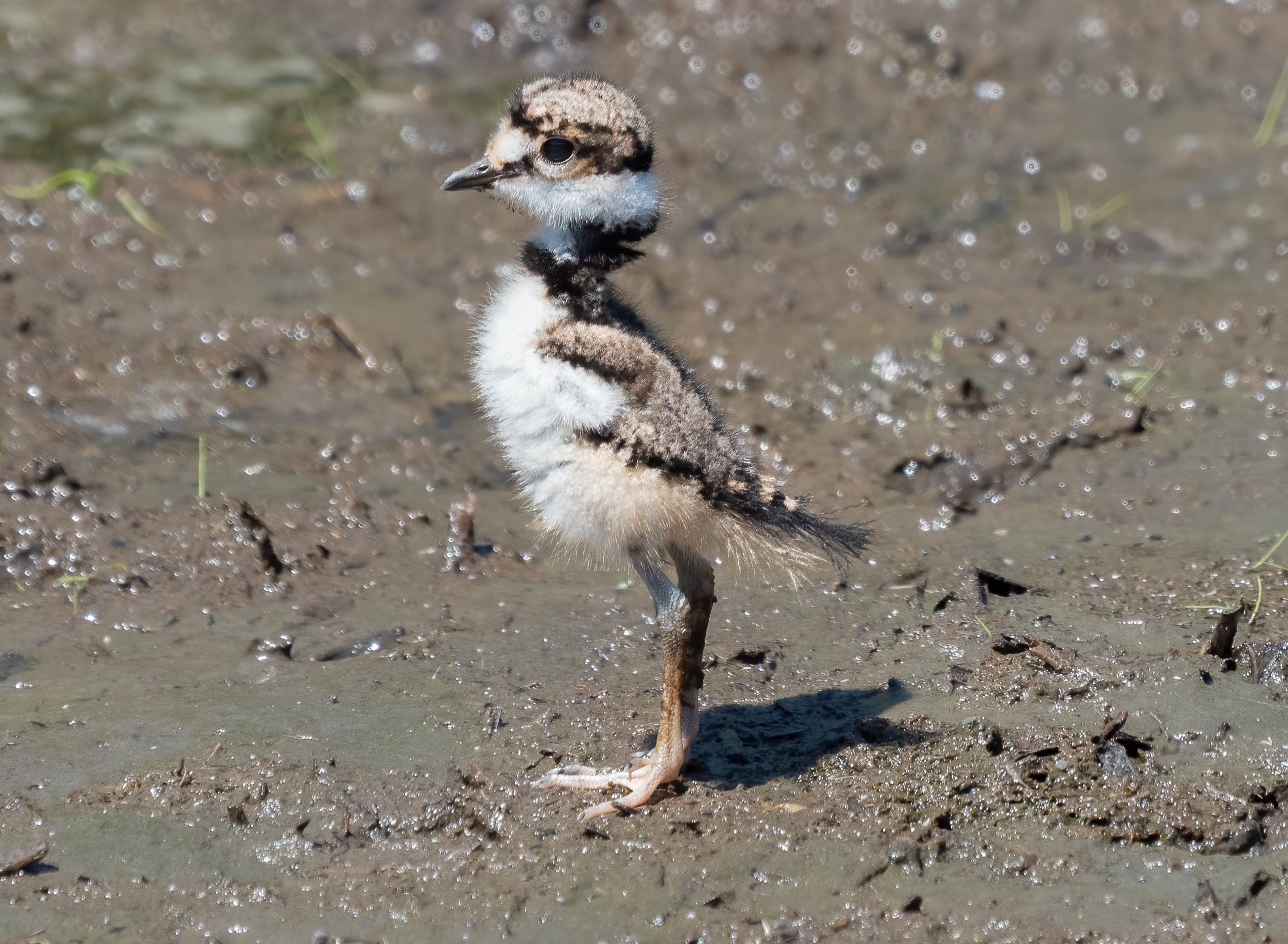
The day they hatch
Killdeer chicks walk within hours. They feed themselves from the start. Tiny puffballs on stilts.
-
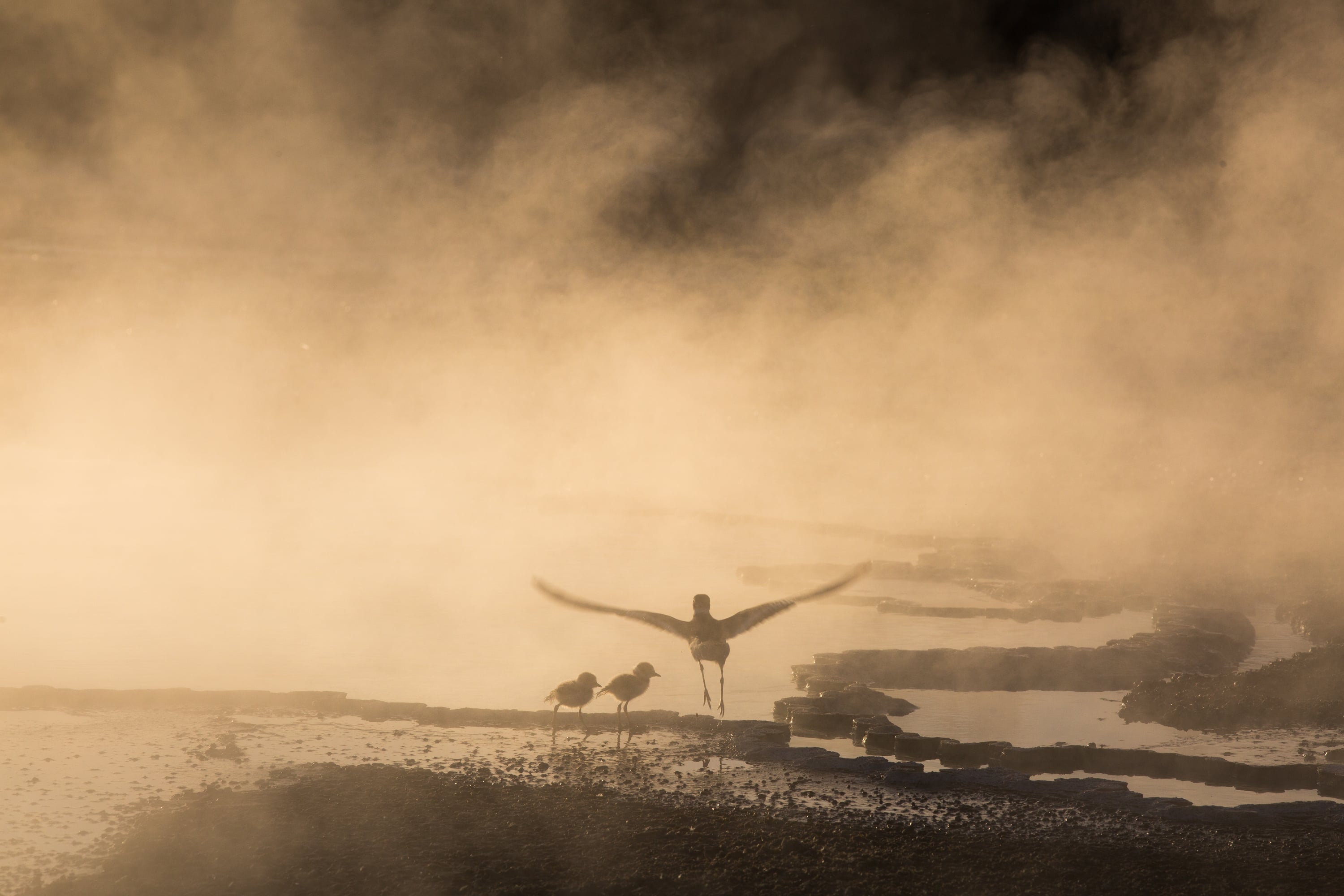
Flying off
About 25 days later, the chicks can fly. Then the whole family quietly disappears.
If you find one
How to be a good neighbor
Do
- Tell a grown-up.
- Keep your distance. Fifteen big steps is a good rule.
- Keep dogs on a leash.
Don't
- Don't touch the eggs. If you move them, the parent might not come back.
- Don't try to "help" the chicks. They walk and feed themselves. They are not lost.
- Don't mow or trim near the nest until the family flies away. About seven weeks.
The best help is to leave them alone.
Fun facts
Things you might not expect
- A killdeer's nest is just a scratch in the dirt. No twigs. No grass. No fluff.
- Killdeer will nest on rooftops, gravel driveways, even airport runways.
- The broken-wing trick fools predators almost every single time.
- Both parents take turns sitting on the eggs. Dad usually takes the night shift.
- When the chicks hatch, they can walk within hours.
- Killdeer have been protected by a federal law since 1918.
Try this
Three things to do this week
- Listen for the call outside. The bird is named for the sound it makes.
- Draw the broken-wing trick. What is the bird telling the fox?
- Count to 25. That is how many days it takes a chick to learn to fly.
Color one in
Print a coloring page
One killdeer, in profile, ready to color. It prints on one piece of paper.
Use any colors you want. The real killdeer is brown on top and white underneath, with two black stripes across the chest and bright pinkish legs. But this is your bird now.
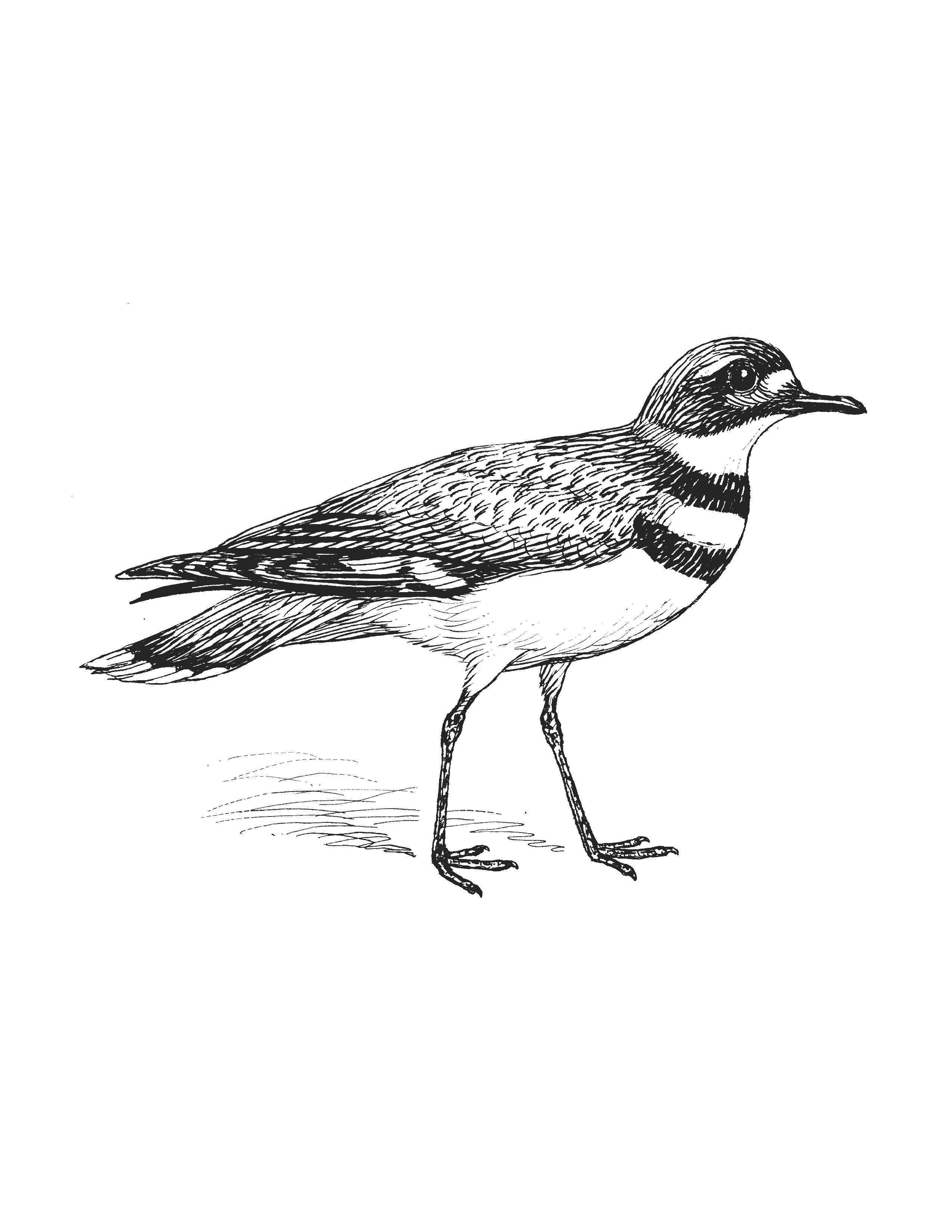
Look at the bird
Field plates
Every picture below is a real photograph of a real killdeer somewhere out in the world. Tap one to see it bigger.